In a rare moment of honesty after murdering Henry Nowak, Vickrum Digwa admitted: ‘I’m a fool.’
But what he failed to acknowledge was that he was also a coward and a liar. Having pulled a knife on his unarmed victim, he stabbed him five times.
Two of the wounds were inflicted to the back of the 18-year-old’s body as he desperately tried to run away.
Another blow from the knife penetrated young Mr Nowak’s chest and lung, cutting a major vein in the process and causing him to slowly start drowning in his own blood.
But rather than call an ambulance, 23-year-old Digwa set about trying to save his own skin.
First he attempted to dispose of the 8in-long knife he would claim that as a Sikh he was entitled to carry for religious reasons.
Then he set about creating a story that painted the first-year finance student at Southampton University as the drunken aggressor and himself as the victim of a vile racist attack – his ‘trump card’.
In the 999 call, officers were fed Digwa’s warped version of events.
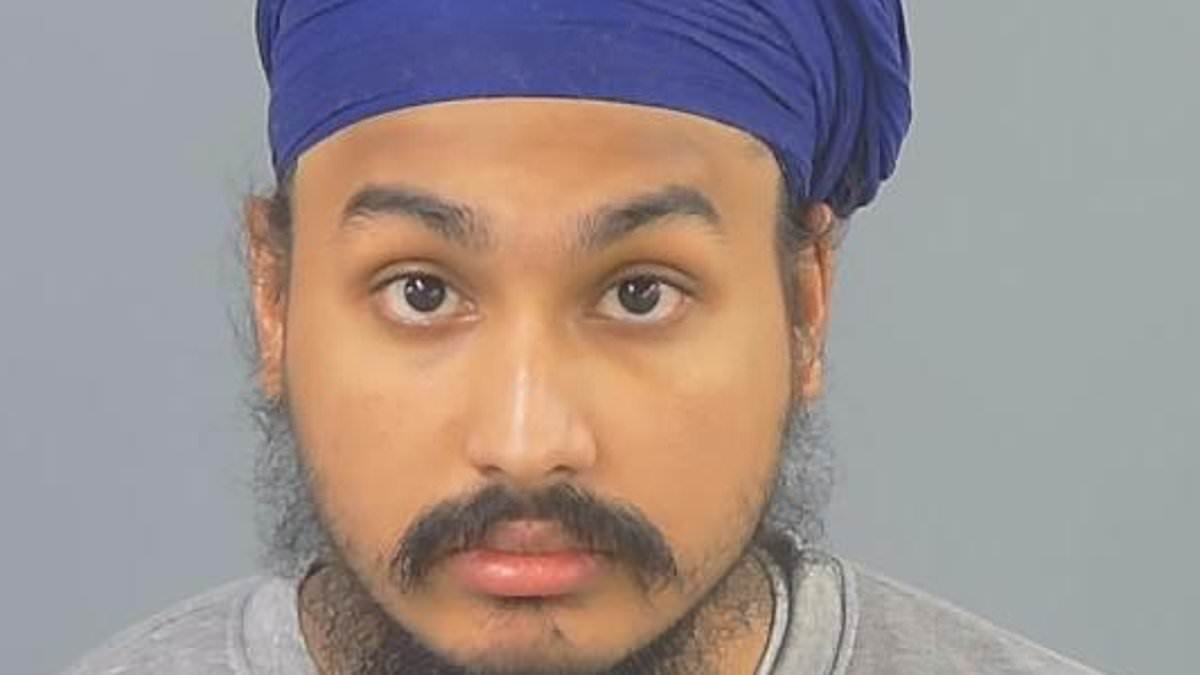
Vickrum Digwa, 23, was found guilty of murdering 18-year-old Henry Nowak with a ceremonial knife
Henry was a finance student at the University of Southampton and was described as ‘kind and talented’ by his family
In so doing, they were not told one key fact – that Mr Nowak had been repeatedly stabbed.
At the time Mr Nowak – who had in fact drunk less than the drink-drive limit – was lying on his side, telling police he had been stabbed and couldn’t breathe.
But Digwa and his family, who had by then gathered at the scene, claimed the dying young man was ‘pretending’ and that he should just stand up.
And so it was Mr Nowak – not Digwa – who was initially arrested on suspicion of assault and put in handcuffs.
It meant there was a further delay before officers realised how seriously injured the student was, called an ambulance and started to try to save his life. All of which was to no avail.
Digwa was then arrested and charged with the killing.
But during a two-week trial, he continued his web of lies – admitting to stabbing Mr Nowak but saying he had acted in the ‘heat of the moment’ in self-defence.
The student, he claimed, had attempted to grab the ceremonial dagger he was wearing in a sheath around his neck – leaving him no option but to react.
However, after deliberating for just six hours yesterday, the jury at Southampton Crown Court found Digwa guilty of murder and of possessing a bladed weapon.
His mother, 53-year-old Kiran Kaur, who had taken the knife from the scene before hiding it at the family home, was convicted of assisting an offender.
As the verdicts were returned, Mr Nowak’s parents broke down in tears. Judge William Mousley KC told Digwa he would be sentenced on Monday and praised those watching from the public gallery for the ‘dignity and respect’ they had shown throughout.
And Robert France, Deputy Chief Constable for Hampshire and Isle of Wight Police, apologised for his force’s actions, saying: ‘I’m sorry that Henry’s life couldn’t be saved that night, and I’m sorry that he was handcuffed and arrested. He was the victim.’
Yet his words are unlikely to quell the controversy about a case that has snowballed online in recent days since coming to the attention of Elon Musk, the world’s richest man.
Responding to a comment on social media site X by far-Right activist Tommy Robinson about the ‘outrageous’ arrest of Mr Nowak, Musk wrote: ‘I am happy to fund a wrongful death lawsuit against these disgusting excuses for law enforcement.
Digwa’s mother Kiran Kaur, 53, was found guilty of assisting an offender by stashing the murder weapon
‘They damn well better have been fired.’
He went on to highlight what he said were the case’s ‘double standards’, asking why it had not received the same level of publicity or attracted the sort of protests as did the death of George Floyd – an African American convicted felon and drug addict who died while being restrained by a white police officer in Minnesota, during an arrest in 2020.
That officer, Derek Chauvin, is currently serving a 20-year murder sentence.
Musk added: ‘This poor boy was running away from someone who stabbed him & stole his phone, but the police in the UK attacked him instead of his murderer!’
During the trial, forensic pathologist Dr Amanda Jeffery told the court Mr Nowak’s handcuffing by police had no impact on his death. This was because the stab wound was ‘in a difficult area to find’ and ‘they would not have been able to do anything about it’.
Following the trial’s conclusion, Hampshire Police revealed it had referred the incident to the Independent Office for Police Conduct (IOPC) the day after the attack.
A spokesman for the watchdog said its investigation was ongoing and included ‘the use of handcuffs by officers and the first aid provided’. He added that the officers involved ‘are currently being treated as witnesses’.
Meanwhile, speaking to the Daily Mail, Deputy Chief Constable France admitted mistakes had been made. ‘This case is an absolute tragedy,’ he said.
‘I’m sorry that Henry’s life couldn’t be saved that night, and I’m sorry that he was handcuffed and arrested.
‘He was the victim. Today, the man who is responsible for killing him has been convicted of murder, and justice has been done.’
Asked whether a fear of being perceived as racist played a part in the officers’ decision to arrest Mr Nowak, he said the IOPC investigation was looking into what happened, but added: ‘I think what I can say at the moment is that it is clear that there were lies told – lies in the [999] phone call, on the scene and as the incident played out.
‘And, certainly, it would be my view that that’s made it more difficult for officers to understand what had happened.’
As for Musk’s criticisms, he said: ‘I’m a strong advocate of free speech. I think it’s important people can say what they feel they want to say. All I would ask is that people try to understand the full circumstances of the case.
‘Officers were called to [what was reported as] a racist assault. There were lies told. It was undoubtedly complex, and it is clear that they misunderstood what was happening, and that is an absolute tragedy.’
That Mr Nowak was a much-loved young man with a bright future there can be no doubt.
Born in London, he and his siblings were raised in Essex. His father has enjoyed a successful career working for supermarkets, and until recently was the group property director for Morrisons. Relatives describe them as a kind, loving family and Mr Nowak as ‘an all-round top lad’ who ‘lit up’ any room he entered.
Having done well in his A Levels, in September last year he started his degree in accountancy and finance. A talented footballer, he had joined two teams and was working part-time at a nearby supermarket.
To celebrate the end of his first term, on December 3 he met up with his new teammates at a pub.
Known to his friends as a ‘lightweight’ drinker, at about 11pm he began to walk home through the city.
As he did so he was messaging and recording videos, sending them to friends via Snapchat.
Henry was a talented footballer and was working part-time at a nearby supermarket during his first year at university
His final video, shot at shortly after 11.15pm, showed Digwa approach and seize his phone. Born and raised in Southampton, at the time Digwa was working as a trainee at a large firm of Hampshire accountants.
But on the night in question he was out in the city helping his older brother, Gurpreet, deliver food for Deliveroo.
The jury heard how baptised Sikhs are obliged to carry and wear certain items, which can include a kirpan, or ceremonial knife.
English and Welsh law allows Sikhs to legally carry such a weapon.
After his arrest, Digwa was found to have a small kirpan worn around his neck and under his clothing.
But he was also carrying a second, larger knife which was used in the attack.
Digwa would claim that as a Nihang Sikh he routinely wore two knives – a group photo taken to mark the moment he joined his accountancy firm shows him smartly dressed and wearing a large knife across his front.
But the prosecution claimed he had a fascination with Sikh weaponry, training with it and giving demonstrations since the age of ten. He also kept an arsenal of knives in his bedroom.
Precisely what happened when the two men initially crossed paths will never be known. One of them is dead, the other a liar.
But evidence from subsequent video recordings and phone calls bookmark the key events.
Digwa claimed that when he first saw Mr Nowak walking towards him, the student was ‘drunk’ and ‘stumbling’ before he barged into him.
He then claimed Mr Nowak used a racial slur to describe people from Pakistan, adding: ‘You think you can do what you want – I’m from Essex and you don’t know what people from Essex are on.’
Digwa claimed he asked Mr Nowak to stop videoing him and to delete the recording, at which point the student started to punch him in the face.
‘I gave him a few punches to the stomach to get him off me,’ Digwa told the court. ‘He grabbed my hair and started dragging me around by my hair. I just wanted to get him off me.’
Fearing he was going to be stabbed with his own kirpan, Digwa reached for the knife and stabbed Mr Nowak twice in the back of the leg, the court heard.
But he claimed he did not intend to stab the student in the chest and was unaware he had done so. The prosecution painted a very different picture of events.
They said that at some stage Digwa was ‘aggressively pursuing’ his victim, with footage taken on Digwa’s phone showing Mr Nowak trying to escape by jumping over a fence, leaving a trail of blood.
Residents called the police after hearing the student shouting that he had been stabbed and was ‘going to die’.
By that point, Digwa’s brother had arrived. The pair also dialled 999, with Gurpreet telling the operator: ‘We just got attacked racially by some white person.’
At no point did the pair call for or request an ambulance.
The men’s father and mother, who lived nearby, joined them.
Kiran Kaur was said to have taken the murder weapon, running to the family home with it before stashing it with ‘an arsenal of weapons’ and returning to the scene.
Asked to explain this, Digwa said he was unaware what his mother had done but the knife was ‘a sacred item’ that could not be left on the floor. The arrival of police at the scene was captured on their body-worn cameras. Digwa again complained of being attacked but did not mention stabbing his victim.
Mr Nowak was handcuffed by the police. He complained that he could not breathe, fell silent and started to convulse.
An ambulance was called and officers began to perform CPR.
Despite a doctor being flown in by helicopter, he died where he lay, on the street. In a prepared statement following his arrest, Digwa alleged that Mr Nowak had subjected him to a drunken, racist assault.
He accused him of knocking his turban off and grabbing him by the hair. With his hair in his eyes, in self-defence he stabbed twice with his kirpan, he claimed.
Digwa used racism as his ‘trump card’, accusing Mr Nowak of racial abuse when police officers arrived so they would arrest the wrong man
But prosecutor Nicholas Lobbenberg KC told the jury to study still images taken from footage before the police arrived – after Mr Nowak had been stabbed.
‘His hair can be seen tied up on his head, neatly,’ the barrister observed. ‘However, when the police arrive, it is now undone and is hanging loose. ‘The prosecution say this shows the dishonest claim of self-defence taking root from the outset.’
Having been arrested by officers, Digwa was covertly recorded in a police van telling his brother he had stabbed Mr Nowak three times.
At one point, his brother told him: ‘You should say it was self-defence.’
Digwa responded: ‘It was my fault, or mistake.’
He asked Digwa why he had used his knife, adding: ‘You should have hit him, beaten him up.’
Digwa replied: ‘I am a fool, an idiot.’
Mr Lobbenberg KC told the jury that Digwa had lied and lied again.
‘The consequence and purpose of these lies is significant,’ he said.
‘He is seeking to hide what he has done. And racism was his “trump card” to try to make sure what he had done was lawful. We say that was a wicked lie about a dying man.’ He added: ‘This is not a case about Sikhism. This is not a case about racism. This is a case about murder.’
Digwa’s mother did not give evidence during the trial, only telling police in a statement that she was not involved in a murder and did not assist an offender.
In the weeks and months following his death, Mr Nowak’s family have campaigned to raise awareness about the impact of knives.
They have also tried to raise money for the charity 2wish, which supports those affected by the sudden death of a young person.
In a tribute following Mr Nowak’s death, they said: ‘Our hearts ache when we think of the bright future he had ahead of him, full of opportunity and adventures.
‘There are no words to describe just how heartbroken we are that we will never get to see him grow and [fulfil] his awesome potential.
‘We are so proud of him and all he achieved. Our world will never be the same without our amazing Henry.’