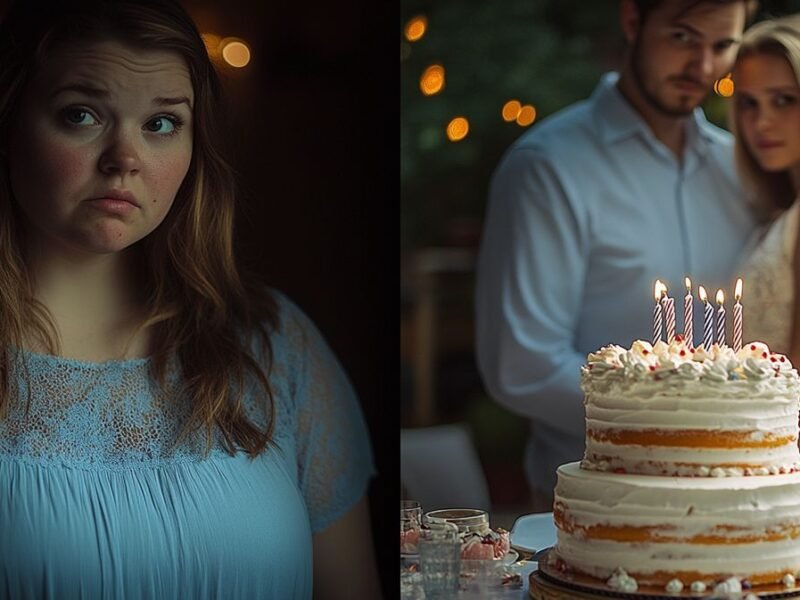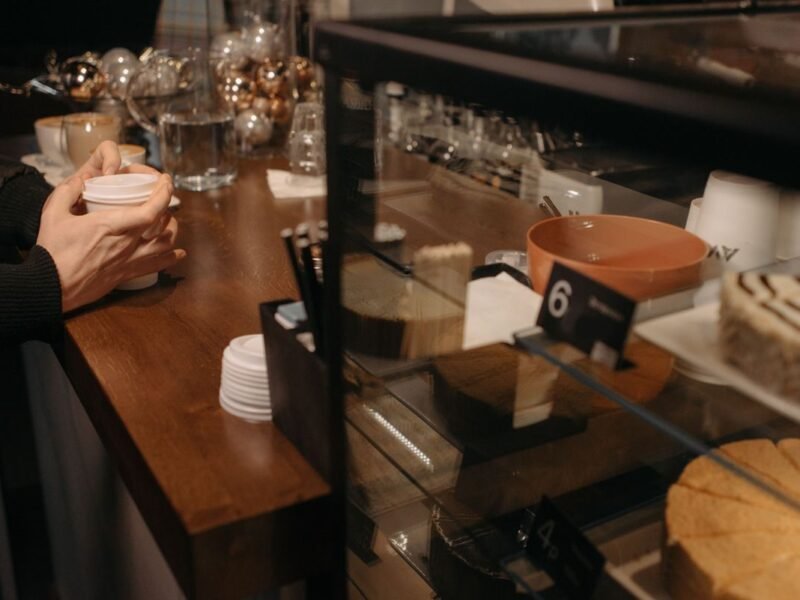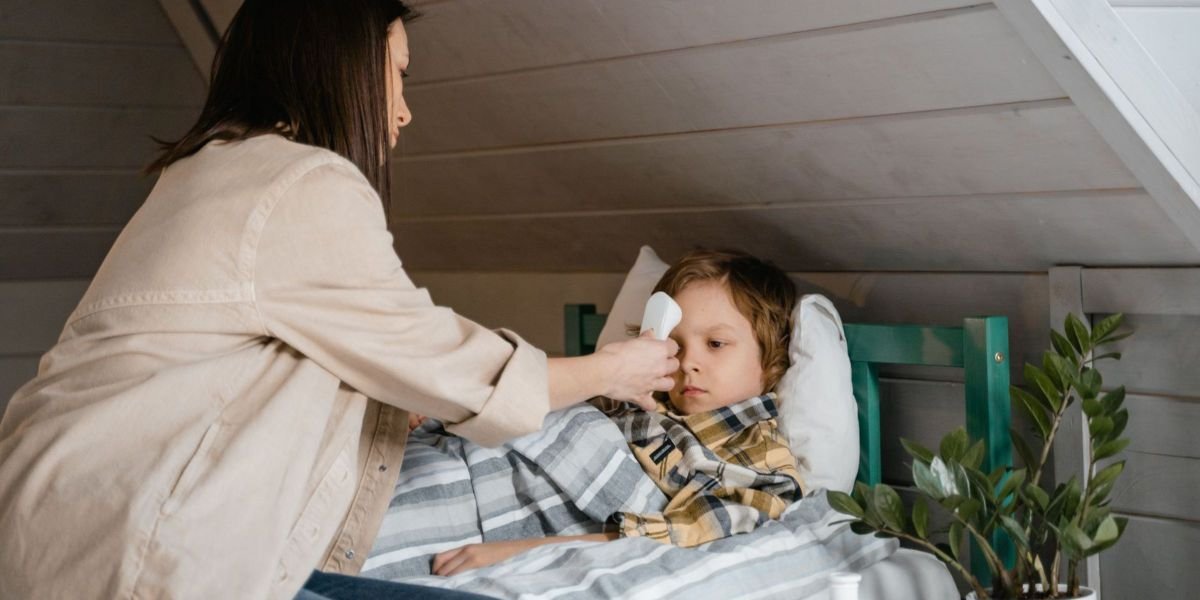
The OPEN sign faced the street when I rushed a feverish little boy to the ER and left my store unlocked. Three hours later, nothing appeared missing. But when an officer arrived three days afterward, he paused my security footage on the stranger behind my counter and quietly asked me to look closer.
The bell above my shop door rang just after nine.
I was counting change when a young woman stumbled inside carrying a little boy.
His head rested against her shoulder.
One of his shoes was missing.
A young woman stumbled inside carrying a little boy.
“Please,” she said. “Do you have a car?”
I came around the counter.
“My car broke down. We were going to the emergency room. He’s been sick all night, and now I can’t wake him properly.”
She was crying so hard she could barely finish.
I touched the boy’s forehead.
I reached for the store phone.
I called emergency services, explained his condition, and followed the dispatcher’s questions while the woman held him.
The dispatcher confirmed that the emergency department was only minutes away. After checking Tyler’s breathing and getting our location, she told us to go straight there and said she’d alert the staff.
“Come on. My car’s outside.”
I didn’t count the register.
Didn’t switch off the lights.
Didn’t even turn the OPEN sign around.
Thirty years earlier, I’d stood beside a broken-down car with my own little boy in my arms.
I didn’t count the register.
I’d watched vehicles pass.
I’d begged someone to stop.
My son had died after we finally reached the hospital.
I never learned whether an earlier arrival would have changed anything.
But I remembered every car that kept going.
I’d begged someone to stop.
“What’s your name?” I asked as I opened the passenger door.
“I’m Mary. Get in, Diana.”
She climbed into the back seat with Tyler.
I drove straight to the hospital.
“I’m Mary. Get in, Diana.”
Behind me, Diana spoke softly to her son.
“Come on, baby. Look at Mommy.”
Then, to me, she said, “He cried all night. I thought it was just a fever.”
“You did the right thing getting help.”
“I thought it was just a fever.”
“My car stopped on the road,” she said. “I tried waving people down.”
“I thought I was going to lose him.”
“I tried waving people down.”
I concentrated on the road.
At the emergency entrance, I hurried inside and told the first staff member I saw that we had a child who was barely responding.
Within moments, a team came out.
They lifted Tyler onto a gurney.
Diana ran alongside them.
I stood near the entrance, holding the car keys.
Then I noticed something on the back seat.
I noticed something on the back seat.
I picked it up and followed Diana inside.
She was sitting in a waiting area, rubbing her hands together.
For some reason, she held on to it instead of putting it in her bag.
“Thank you,” she whispered.
“I pulled you away from your work.”
“Don’t worry about that.”
“I pulled you away from your work.”
“Could you stay? Just until somebody tells me something?”
She told me Tyler was five and loved toy trucks. Every few minutes, she glanced toward the treatment-room doors.
Eventually, a clinician came to speak with her.
Tyler was seriously ill, but treatment had begun and he was responding.
Later, the clinician returned with better news.
They expected him to recover, although he needed to remain in the hospital for observation.
Then she leaned over and hugged me.
“I don’t know what I would’ve done.”
“I don’t know what I would’ve done.”
She stood, still clutching the little sneaker.
I watched her disappear through the doors.
Then I looked at the clock.
Nearly three hours had passed.
Nearly three hours had passed.
I hadn’t asked anyone to watch it.
By the time I reached the shop, I was imagining empty shelves and an open cash drawer.
But the front door was closed.
The OPEN sign still faced the street.
Inside, everything looked normal.
The shelves were neat, the register was closed, and nothing appeared to be missing.
I looked toward the camera above the register.
I could review the footage later.
Inside, everything looked normal.
Instead, I turned the sign around, locked the door, and went home.
That night, I kept thinking about Diana holding Tyler’s shoe.
And about the little boy I’d once held in my own arms.
He loved helping me arrange the canned goods, although he always put the labels facing the wrong way.
I still sometimes caught myself straightening a can and remembering his small hands.
On the third morning, a police officer walked into my store.
He looked to be in his thirties.
“Are you Mary? The owner?”
A police officer walked into my store.
“I’m following up on a report about this business being unattended earlier this week.”
I put down the price labels I was sorting.
“Were you the person who drove a woman and her son to the hospital?”
“Yes. Is Tyler all right?”
“I haven’t had an update on the child, ma’am. I’m here about the shop.”
He glanced toward the camera.
“Have you watched your security footage from that morning?”
“I’m here about the shop.”
I looked at the register.
“We haven’t had a theft reported. I’d like to confirm what happened and whether anything’s missing.”
He explained that someone had called the non-emergency line after finding the store unattended.
A patrol officer had checked on it that morning.
Several people were already there.
“They said you’d left because of a medical emergency,” he told me.
Several people were already there.
He nodded toward the computer.
“Would you mind showing me the recording?”
I opened the camera system.
My hands weren’t steady enough to type the password correctly the first time.
Finally, the footage appeared.
I opened the camera system.
There I was, hurrying through the door with Diana and Tyler.
The door swung shut behind us.
A few minutes later, a man entered.
He wore a faded delivery-company jacket.
Called toward the back of the shop.
Then he stepped behind my counter.
On the screen, the man looked down at the register.
Instead, he took out his phone.
A woman entered a few minutes later.
They spoke, gesturing toward the door.
The recording had no sound.
The first man moved away from the register.
The recording had no sound.
He picked up a piece of paper and wrote something.
Then he taped it to the glass.
The officer pointed at the screen.
He picked up a piece of paper and wrote something.
A woman I recognized from the bakery across the street arrived carrying a chair.
She placed it near the entrance.
One of my longtime customers.
She stayed there while the others moved around the shop.
A man checked the back door.
Someone straightened the handwritten sign.
The delivery-jacket man stood near the counter, greeting customers and explaining something I couldn’t hear.
A man checked the back door.
Nobody carried anything away.
When the first group left, two other people arrived.
They took turns staying near the entrance.
The footage continued until I returned from the hospital.
Nobody carried anything away.
Just before my car pulled up, the man in the delivery jacket checked that the register was closed.
As he bent forward, his sleeve slipped back.
I noticed an old metal wristwatch with a cracked dark strap.
He had a rectangular patch on his jacket where a name badge used to be.
I noticed an old metal wristwatch with a cracked dark strap.
Then he stepped away from the counter.
By the time I pushed the door open, everyone was gone.
“They were watching my store?”
“That’s what it appears.”
“That’s what it appears.”
“Someone nearby knew you’d taken a child to the hospital. Word got around.”
I looked again at June sitting beside the handwritten sign.
“Do you recognize the man in the jacket?” the officer asked.
“Do you recognize the man in the jacket?”
I checked the till again, then the stock nearest the counter.
He finished the report, then hesitated.
“There’s something else I’d like to ask. It isn’t police business.”
He glanced at the paused recording, then took his notebook off the counter.
“My father was one of the people here that morning.”
The officer looked at the floor for a moment.
“He asked me to pass along a message. He’d like to speak with you, if you’re willing.”
“About something that happened a long time ago.”
“He’d like to speak with you, if you’re willing.”
“He thinks he may have seen you on the road the day your son died.”
I put one hand on the counter.
“How would he know about that?”
“He thinks he may have seen you on the road the day your son died.”
“He remembered the blue station wagon and the woman waving beside it. When he heard about Ben’s death, he saw your name and photograph in the local paper. The bakery owner called him on Tuesday and said Mary’s store had been left open because she’d taken a sick child to the hospital. He knew which Mary she meant.”
“He heard about Ben’s death.”
I looked at the paused image on the screen.
The man in the delivery jacket stood behind my counter.
Thirty years earlier, I’d watched so many cars pass that I couldn’t have described a single driver.
“Does he want me to forgive him?” I asked.
I looked at the paused image on the screen.
The officer placed a small piece of paper on the counter.
“My father’s number. You don’t have to call.”
I stood alone in the shop, looking at the number.
June came in, leaning on her walking stick.
“Mary! I was hoping you’d be here.”
I came around the counter.
“June, I saw you on the camera.”
“Tuesday morning. You sat outside my shop.”
“Why didn’t you tell me?”
“You had enough on your mind.”
“Why didn’t you tell me?”
“You stayed for nearly two hours.”
I laughed despite myself.
“After my husband died, I didn’t want to go anywhere. Remember?”
“You kept asking whether I wanted my usual tea. Some days I came in just because I knew you’d ask.”
“You let me sit here and talk, even when I didn’t buy a thing.”
“Some days I came in just because I knew you’d ask.”
She tapped her walking stick against the floor.
“You were the first person who made me feel like I still belonged somewhere.”
June reached for a packet of biscuits.
“You don’t get to decide it meant nothing just because it was easy for you.”
June reached for a packet of biscuits.
Then she held up the packet.
“Are these still on special?”
“Are these still on special?”
After June left, I replayed the footage. The man in the faded jacket had stayed until I returned.
I picked up the phone number.
I could have left it in the drawer.
A man answered on the third ring.
I picked up the phone number.
“My name is Mary. Your son came to see me.”
I looked at the old footage.
“Would you come by after closing?”
“And please don’t bring your son. I’d rather speak with you alone.”
For thirty years, I’d wondered about the people who drove past my broken-down car.
Now one of them was coming to my store.
And I wasn’t sure what I wanted him to say.
For thirty years, I’d wondered about the people who drove past my broken-down car.
Thomas arrived after closing.
I recognized his jacket and cracked watch.
“Thirty years ago,” he began, “I saw you waving beside your car. I was behind schedule. I drove past.”
“I turned around eventually,” he recalled. “You were gone.”
“Would stopping have saved Ben?”
“I don’t know,” he said. “I wish I’d given you the chance to find out.”
He didn’t ask forgiveness.
I told him Ben used to arrange my canned goods backward because he liked seeing the pictures.
He didn’t ask forgiveness.
Before leaving, he wrote a number on the back of a receipt.
“A few of us help stranded drivers around town. If somebody ever needs a hand, this is who to call.”
“I’m sorry, Mary,” he said.
“Thank you for watching my store.”
That was all I could offer.
“Thank you for watching my store.”
The next morning, Diana returned with Tyler.
He looked tired but cheerful.
“Mom says you drove us,” he said.
Later that day, as I was closing, a customer hurried inside.
“My car won’t start. Do you know anyone?”
I remembered the roadside-assistance number Thomas had given me.
“My car won’t start. Do you know anyone?”
Someone promised to come.
“Should I wait outside?” the customer asked.
I turned the OPEN sign to CLOSED.
“There’s a chair by the window.”
I switched off the display lights, leaving the counter lamp on.
Then I pulled another chair beside his.
Outside, a vehicle slowed near the curb.
The driver stopped and stepped out.
I stood to open the door.
I pulled another chair beside his.