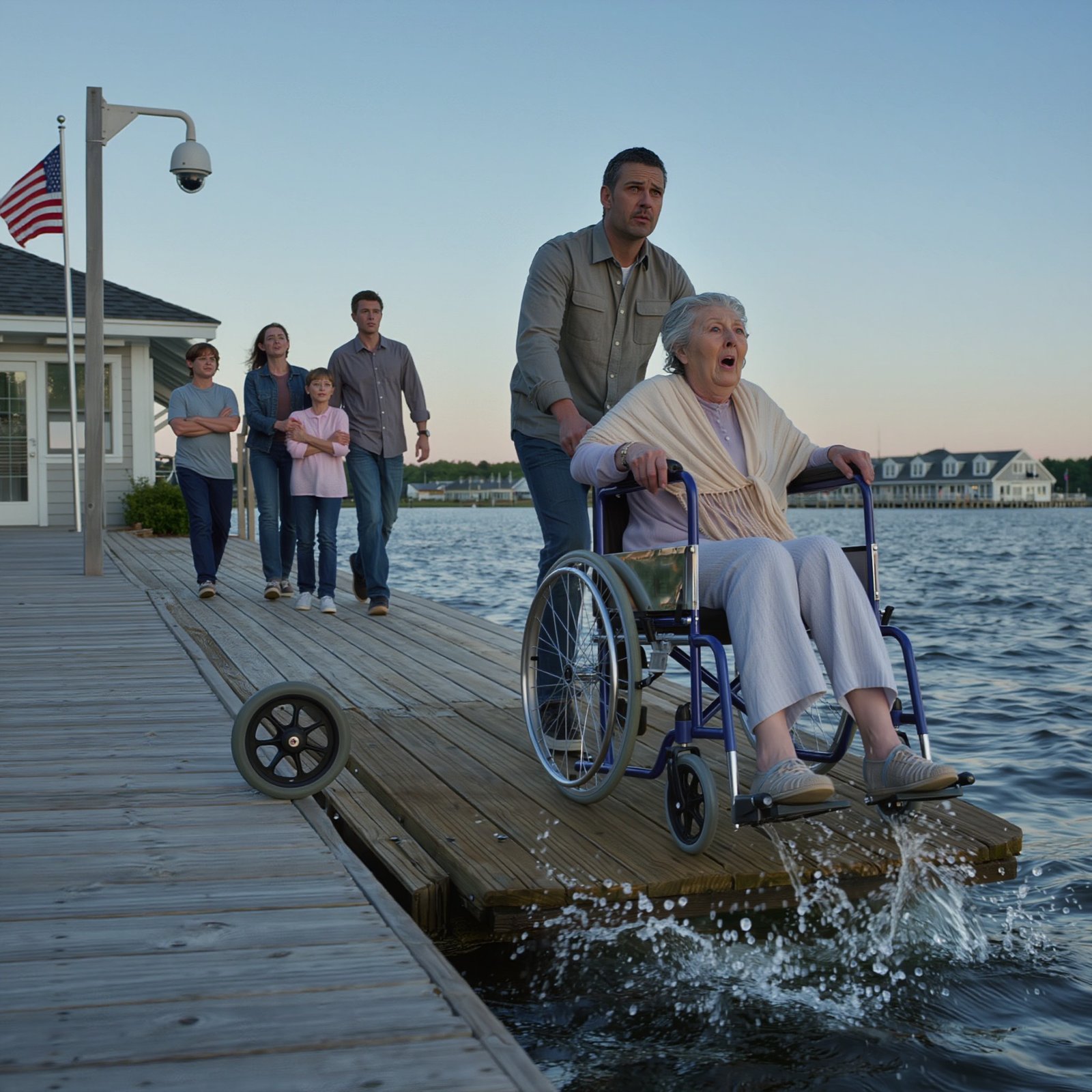
They didn’t look back. That’s what I remember most—the sound of their footsteps walking away, certain the lake had finished their work. What they didn’t know was that the water was my oldest friend. I let myself sink, then pushed toward the hidden pilings of the dock. As I clung there, dripping and alive, I understood the transaction was complete. They had traded any claim to my heart for a sum of money. I was free of the burden of loving them.
The woman who pulled herself onto the shore was stripped of illusions. My home, once a place of memory, was now a site of evidence. I began to collect it calmly: the forged signatures at the bank, the manipulated accounts, and finally, the crystalline digital record from the marina camera. Each piece was a brick in the wall I would build between their world and mine. I enlisted my steadfast granddaughter and my shrewd old lawyer, not for revenge, but for reconstruction.
The confrontations were anticlimactic. My nephew’s nervous plea, my son-in-law’s explosive visit—they were the last thrashing of creatures who sensed the trap closing. I didn’t raise my voice. I simply presented the new reality: their access was terminated, their plans nullified. My daughter’s tearful visit was the hardest, a glimpse of the person she might have been, buried under fear and complicity. I offered no absolution, only the stark landscape of consequence.
The law moved with its own slow weight. The video evidence made the case simple. As the legal process unfolded, I made my own move: a small cottage by the sea. Moving there wasn’t running away; it was moving toward. Toward peace, toward simplicity, toward a view that reminds me of my own small, precious place in a vast world. The push into the lake was meant to be an ending. It became, instead, the most decisive beginning of my life. It proved that even at the edge of everything, you can choose to swim toward a new shore.