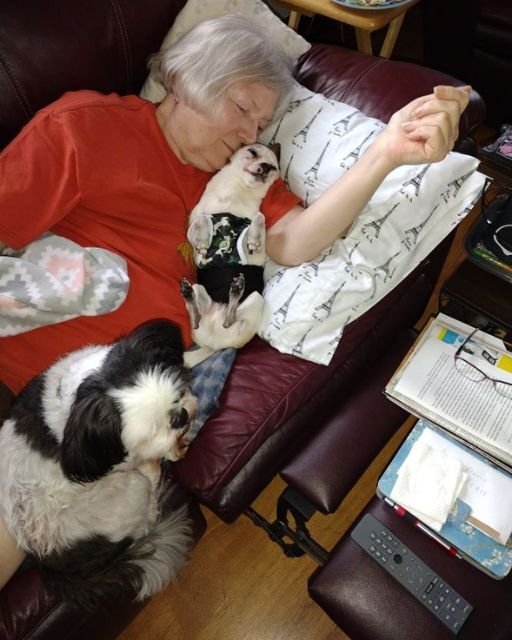
We often miss the quietest cries for help, mistaking them for calm. My grandmother was the strong, silent type, so her steady routine after my grandfather’s death seemed like resilience. Her four o’clock ritual with her dogs, Max and Coco, was a picture of peaceful solitude. I failed to see that the dogs weren’t just keeping her company; they were on duty. The day I found her, the silence in the house was a physical thing. Coco was acting not as a pet, but as a guardian, her small body pressed with urgent purpose against my grandmother’s still form. The empty pill bottle was the clue, but the dogs’ behavior was the first, loudest alarm.
In the frantic moments that followed, their instincts were a guide. Max’s desperate signals to the door, Coco’s distressed resistance to being separated from her human—they were narrating a crisis in a language beyond words. At the hospital, the doctor’s diagnosis was twofold: an overdose treated, and a severe depression uncovered. The grandmother I thought was coping was, in fact, drowning in a grief she felt too proud to share. She believed her pain was a burden to us, a final act of love to keep it hidden. It was a devastating miscalculation born from love itself.
Her recovery began with a different kind of prescription: presence. Not my frantic, problem-solving presence, but a quiet, listening one. We built a new routine centered not on solitude, but on gentle engagement. The dogs were central to this. Their need for walks got her outside. Their unconditional affection was a constant, non-judgmental reassurance. They loved her the same whether she was laughing or crying, a lesson in acceptance we humans struggled to match. They taught her—and me—that being needed is a powerful antidote to feeling worthless.
Sitting with her months later, she shared her perspective on that day. She said Coco, by refusing to budge, was holding her here. Not just physically in the chair, but spiritually to this life. The dog’s stubborn love was a tether she couldn’t sever. In her darkest moment, that small creature’s insistence on connection was a powerful argument against oblivion. Their love spoke louder than the silence of her despair. It’s a humbling lesson: sometimes the most vigilant guardian of a human heart isn’t another person, but a loyal animal whose love, though silent, is profoundly eloquent. They hear the cries we silence and answer with a faithfulness that can, quite literally, save a life.