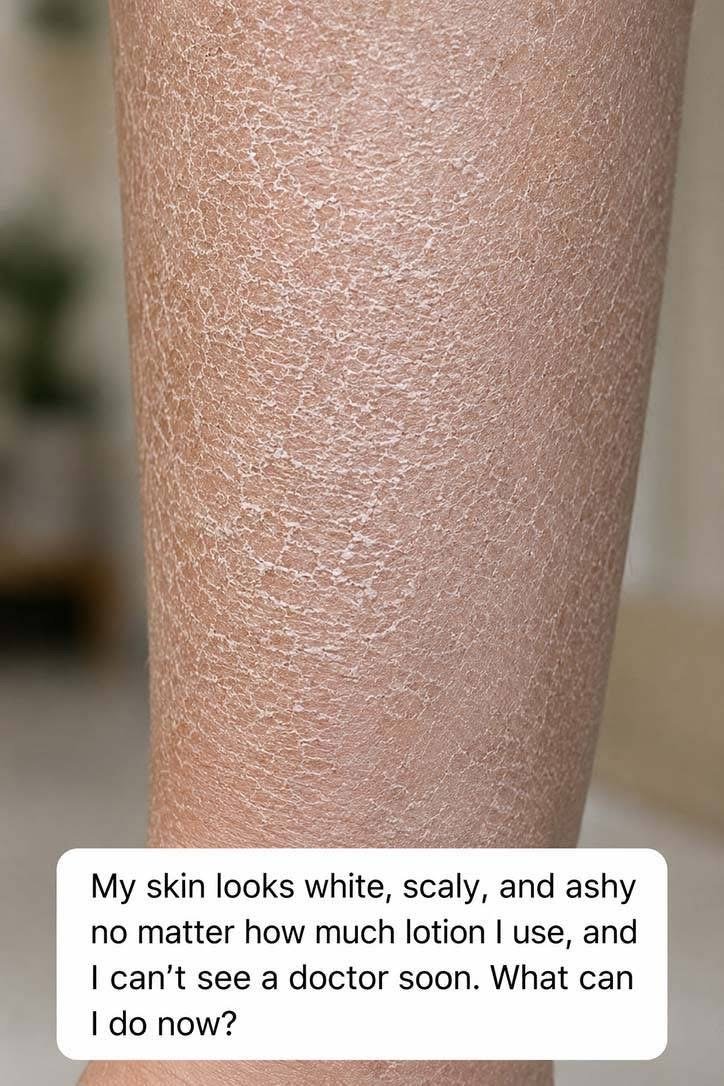
Dry, flaky skin can become frustrating when it seems to return no matter how much moisturizer is applied. Many people notice their skin appearing white, rough, or tight shortly after using lotion, especially during colder seasons or in dry indoor environments. In many cases, this happens because the skin’s natural protective barrier has become weakened. When the surface barrier loses moisture and natural oils, the skin may struggle to retain hydration effectively, leading to visible dryness, scaling, and discomfort throughout the day.
Several everyday habits can contribute to this cycle without people realizing it. Long hot showers, harsh soaps, heavily fragranced products, and aggressive scrubbing may remove natural oils that help protect the skin. Dry indoor air from heating systems can also increase moisture loss, especially during winter months. Instead of focusing only on applying more lotion, many skincare experts recommend supporting the skin barrier itself through gentler routines and consistent hydration practices that help the skin maintain moisture more effectively over time.
One commonly recommended approach involves applying richer creams or ointments shortly after bathing while the skin is still slightly damp. Products containing ingredients such as ceramides, glycerin, hyaluronic acid, or urea are often used to help support moisture retention and improve skin texture. Switching to lukewarm water, limiting shower time, choosing fragrance-free cleansers, and wearing soft breathable fabrics may also help reduce irritation. In some homes, adding moisture to the air with a humidifier can make dry environments feel more comfortable for sensitive skin.
Although dry skin is very common, persistent irritation, severe cracking, swelling, or discomfort that worsens over time should not be ignored. Skin changes accompanied by pain, bleeding, widespread redness, or signs of infection may require evaluation by a healthcare professional. In many situations, however, consistent gentle care and barrier-supporting habits can gradually improve the skin’s appearance and comfort. Rather than relying on quick fixes, long-term improvement often comes from reducing irritation, protecting moisture, and maintaining a steady skincare routine that supports the skin’s natural balance.