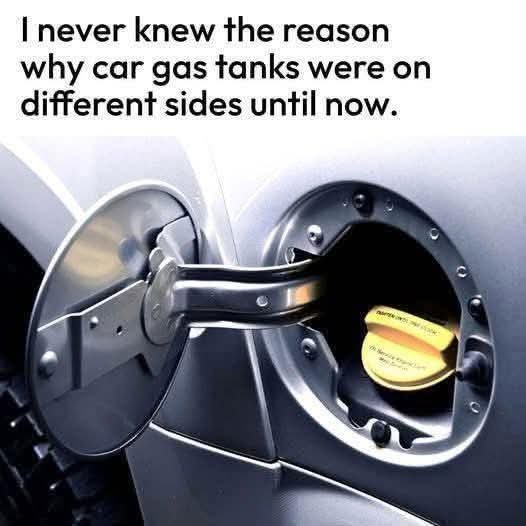
We’ve all been there: circling the pump or stretching the hose because our gas tank is on the “other” side. It feels like a quirky design choice, but the position of your fuel door is a textbook example of form following function. It’s the visible tip of a much larger iceberg involving chassis design, international regulations, and human behavior. Understanding the reasons can turn that moment of frustration into one of appreciation for automotive engineering.
Beneath the sleek exterior, a car is a densely packed machine. Engineers select the fuel door location based on the most efficient route for the filler pipe. This tube must travel from the gas tank, avoiding obstacles like the exhaust, driveshaft, and structural braces. The side with the fewest conflicts becomes the obvious choice. This decision is cemented early in a vehicle’s development, as altering it later would compromise the entire rear-end design and be prohibitively expensive.
Global consumer preference is another powerful force. In markets with left-hand traffic, drivers naturally feel safer accessing a pump from the curb side, leading to a prevalence of left-side fuel doors. In right-hand-drive countries, the opposite holds true. Automakers cater to these ingrained habits. While some once speculated that placing the tank on the passenger side was safer in a crash, comprehensive testing has shown that modern vehicle safety is not dependent on this single factor.
A fascinating, broader benefit of this design variety is its impact on public infrastructure. The random distribution of left and right-side tanks among a population of cars helps gas stations operate more smoothly. It naturally balances the use of dual-sided pump islands, preventing long queues from forming on just one side. This unintentional bit of social engineering makes the refueling process faster and more efficient for everyone on the road.
To avoid the guessing game, manufacturers added a universal clue: a small arrow on your instrument cluster, next to the fuel pump icon, points to the correct side. As we move toward an electric future, the fuel door is evolving into a charging port. The same core design challenges persist—where to place it for easy access without compromising the vehicle’s structure or safety. The specifics may change, but the intelligent, practical reasoning behind that placement remains a constant of good car design.