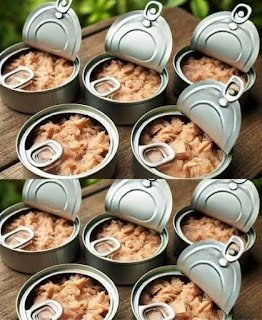
That moment after a meal—the empty can sitting on the counter—is a crossroads. The easy path leads to the trash. The more creative, rewarding path sees a resource ready for renewal. Empty tuna cans, with their dependable shape and sturdy build, are ideal candidates for upcycling. This practice is more than a craft; it’s a mindful choice to reduce consumption and waste, turning an ordinary object into an extraordinary tool for home, garden, and family.
Imagine soft candlelight emanating from a container that once held your lunch. This is an easy reality. Creating a candle in a tuna can is a simple, rewarding project. You can even embed dried flowers or citrus peels in the wax for a custom scent and look. If gardening calls to you, these cans are ready-made for it. A coat of exterior-grade paint protects the metal, and with drainage holes added, they become perfect homes for shallow-rooted plants like sedums or herbs. Arrange a collection on a balcony railing for a charming, space-saving garden.
Their organizational capabilities are limited only by your needs. In the bathroom, they can hold cotton balls, bobby pins, or sample-sized products. In the utility room, they organize loose change, batteries, or lightbulbs by size. For a cohesive look, paint a set in gradient colors or use a label maker to clearly identify contents. Their ability to stack neatly makes them a genius solution for tight shelves, allowing you to use vertical space efficiently while keeping everything accessible and tidy.
Don’t underestimate their role in sparking creativity. For children, a decorated can becomes a rocket ship for toys, a crown for dress-up, or a drum in a homemade band. For the more artistically inclined, they can be punched with patterns to create intricate lanterns or stitched into quirky ornaments. A smoothed-out can also serve as a perfect palette for mixing small amounts of epoxy resin or acrylic paint for detailed models.
Giving a tuna can a second life is a small act with a large resonance. It cultivates an attitude of resourcefulness, where nothing is simply “thrown away” without consideration. It connects us to the handmade and the thoughtful in a world of mass-produced goods. Each repurposed can is a quiet statement: that we are clever, that we care about our impact, and that we find joy in making the old new again. It’s a simple proof that sustainability is not just a concept, but a creative and practical way of life.