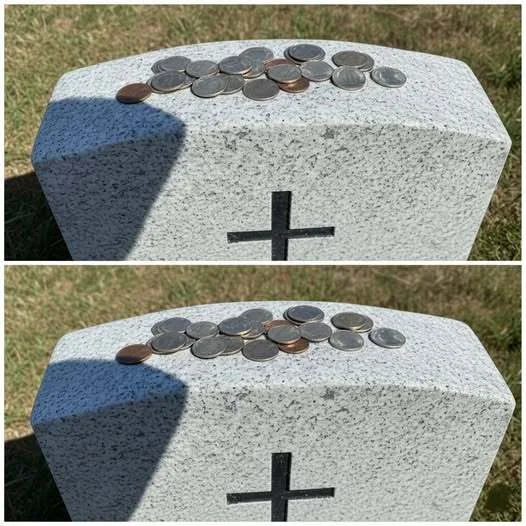
A coin on a gravestone can be a puzzle to those who don’t know its significance. But in the hallowed grounds where veterans rest, each coin is a clear and intentional symbol. This practice is a quiet tradition of remembrance, a non-verbal way for visitors to communicate their respect, their history, and their ongoing grief for a fallen comrade.
Tracing back to ancient rites, the modern American version of this ritual solidified during the Vietnam War. In a time when soldiers returned to a nation conflicted about their service, public mourning was fraught. Veterans created their own private means of honoring the dead. Leaving a coin became a powerful, personal statement—a way to mark a visit and affirm a bond that death could not break. It was grief made tangible, without the need for explanation.
The denomination of the coin acts as a key to the visitor’s relationship with the deceased. Leaving a penny means you came to remember them. A nickel says you trained together. A dime signifies you served alongside them in the military. A quarter, perhaps the most meaningful, indicates you were present when they died. This code allows for a deep and personal narrative to be shared in the simplest of ways, a silent testimony to shared experience and loss.
For the families who come to pay their own respects, finding these coins is a profound experience. It is evidence that their loved one is remembered by their military family, that their sacrifice is honored by those who truly understand its cost. It offers a sense of community and continuity. In a society that often struggles with how to handle grief, this tradition provides a perfect, quiet answer. It demonstrates that honor doesn’t need to be loud or lavish. Sometimes, it is perfectly expressed by the gentle weight of a single coin, a silent thank you left in the light for a hero who is never forgotten.