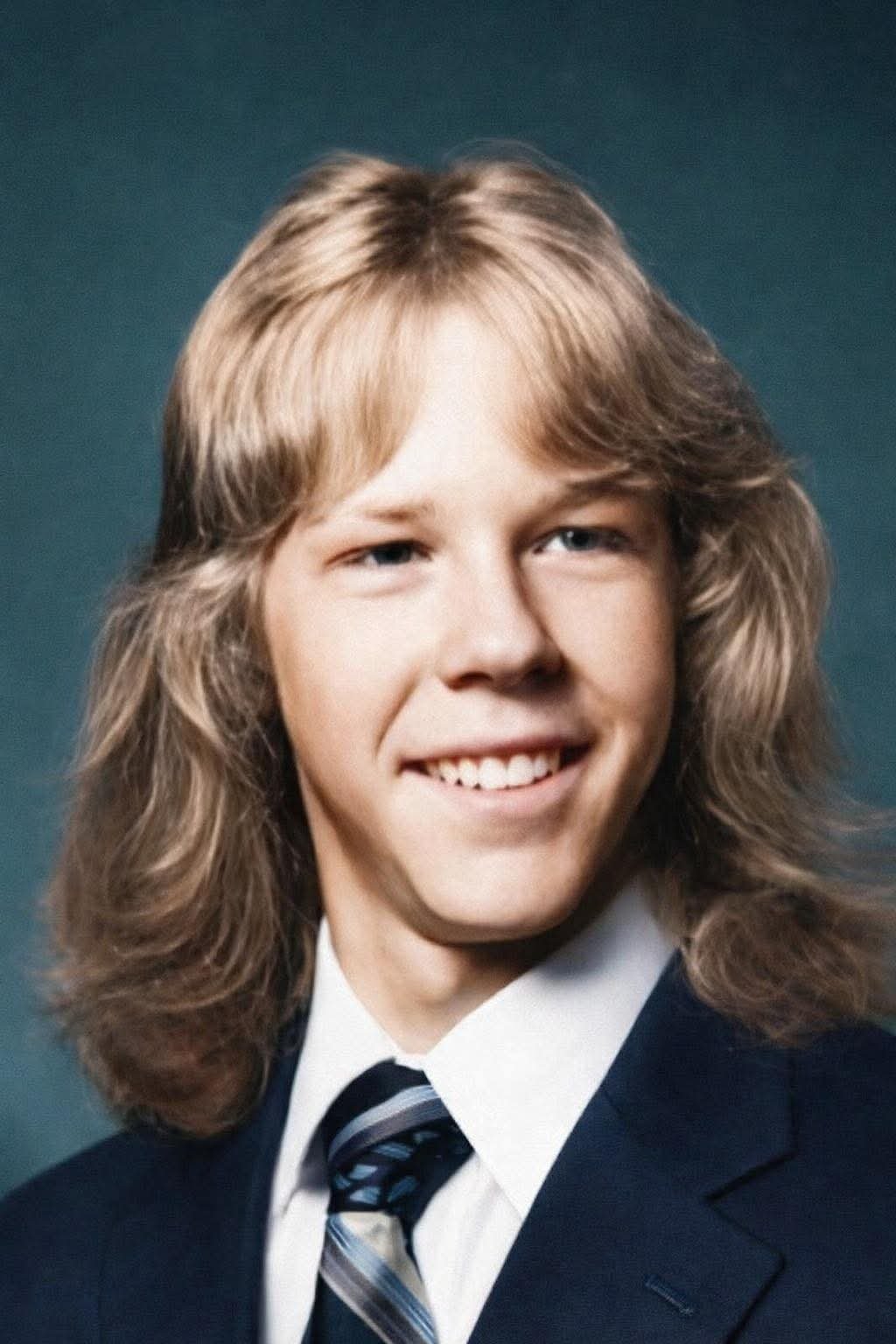
In the beginning, there was only silence and strict doctrine. James Hetfield’s childhood was a prison of religious fervor where illness was met with prayer, not penicillin. The consequence of this belief was the devastating, formative loss of his mother. Her death from untreated cancer planted a seed of profound fury and betrayal in the adolescent boy. That seed found its growth not in words, but in vibration and voltage. The guitar became his confessional, his weapon, and his world. Within its fretboard, he mapped a geography of grief and rebellion, channeling a tempest of complex emotions into the disciplined craft of songwriting. This was not a pursuit of fame, but a frantic search for a self that could survive.
That search roared to life with Metallica. Hetfield, as the band’s lyrical heart and rhythmic anchor, became the architect of thrash metal’s most visceral anthems. His songwriting gifted a voice to the voiceless, building a community of fans who found solidarity in his raw exposition of pain. As the band achieved unimaginable commercial success, a cruel irony set in. The global scream of approval could not quiet the internal whispers of the abandoned boy. The lifestyle of a rock titan—perpetual motion and accessible excess—became a dangerous cocktail, allowing him to outrun his past temporarily but never to confront it. The very anger that powered his art was slowly consuming the artist.
Salvation arrived not with a triumphant chord, but with a desperate, solitary decision. At the peak of his career, Hetfield voluntarily walked away to enter rehabilitation. This chapter, laid bare in the documentary Some Kind of Monster, was his most courageous performance. It featured no pyrotechnics, only the raw, uncomfortable work of therapy and the fragile rebuilding of trust with his bandmates and family. The invincible frontman was seen learning to be vulnerable, to parent, to communicate—skills far removed from stadium heroics but essential to becoming a whole man. It was a public testament to the idea that sometimes, to save everything, you must first surrender.
Emerging from that fire, James Hetfield redefined what strength means. He continues to command stages with the same formidable presence, but now it is underpinned by a deep sense of gratitude and hard-won peace. His journey is a beacon, demonstrating that our deepest scars can become the sources of our greatest power and empathy. He is a legend not just for the music that soundtracked a generation’s rebellion, but for the personal revolution that followed—a lifelong commitment to turning the heavy weight of the past into the foundation for a future built on honesty and resilience.