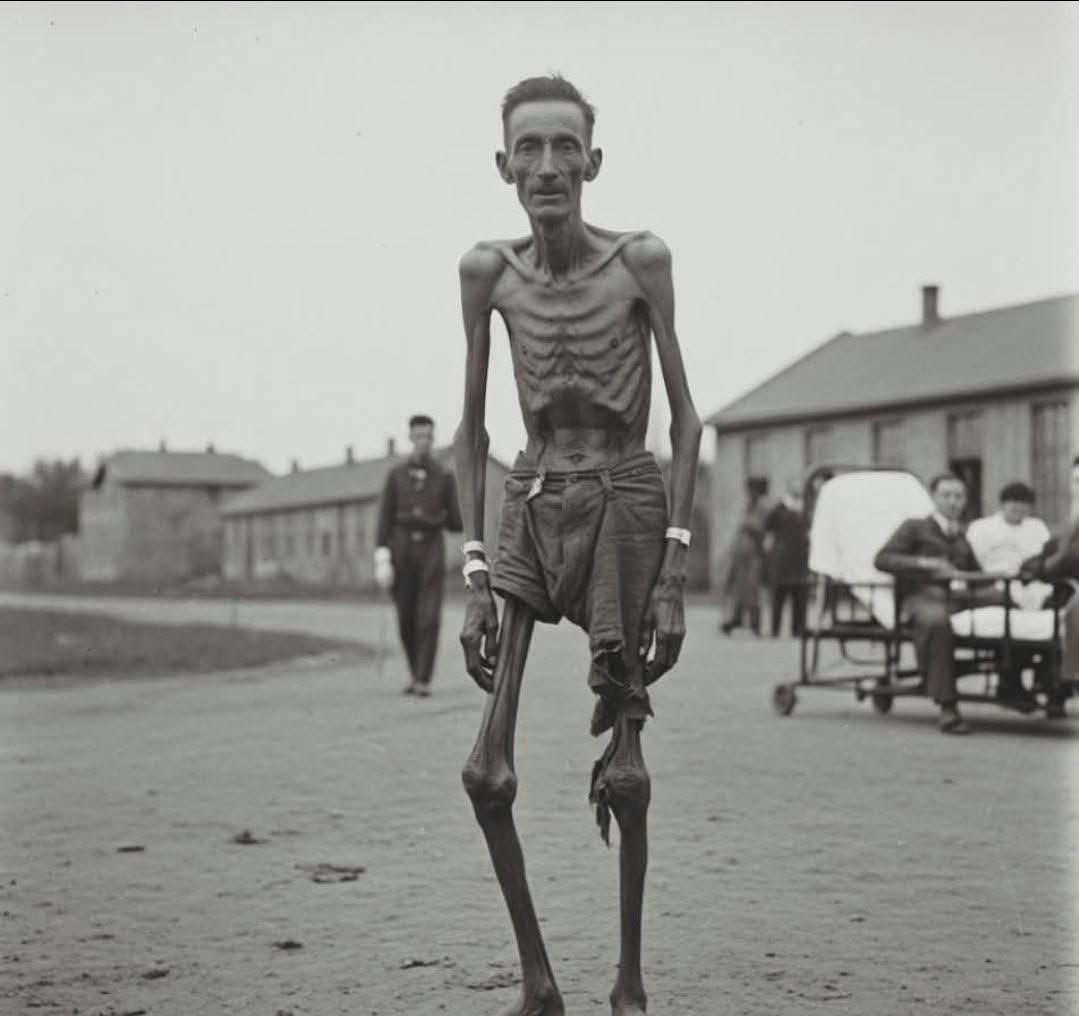
On April 11, 1945, American soldiers entered the Nordhausen area of central Germany and encountered something that no battlefield could have prepared them for.
They had seen destruction.
They had seen death.
They had seen the consequences of war.
But at the Mittelbau-Dora concentration camp complex, they encountered human beings who had been reduced to the edge of survival by forced labor, starvation, disease and systematic brutality.
The soldiers of the US 3rd Armored Division and 104th Infantry Division found the camp after the SS had already begun evacuating prisoners.
What remained behind was horrifying.
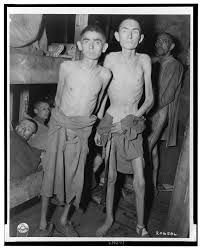
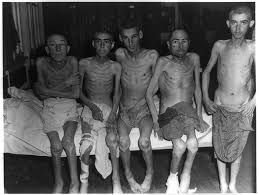
At the Boelcke-Kaserne subcamp near Nordhausen, American troops found corpses scattered throughout the camp and hundreds of severely ill and starving prisoners. Some survivors were so emaciated and weak that they could barely move. Many were suffering from tuberculosis and other diseases.
For the soldiers entering the camp, the war suddenly became something different.
This was no longer an enemy position.
It was a place filled with people who desperately needed to be saved.
The liberation did not look like victory
When people imagine liberation, they may picture cheering crowds, flags and soldiers walking through open gates.
At Mittelbau-Dora, there was little that resembled celebration.
The camp had been devastated by months and years of exploitation.
Prisoners had been forced to perform brutal labor under conditions designed to extract as much work as possible from human beings while providing them with almost nothing necessary to survive.
The Mittelbau complex was connected to a massive underground weapons program.
Prisoners were forced to construct tunnels and facilities and to work in underground factories associated with the production of Germany’s V-2 rockets.
The work was extraordinarily dangerous.
The conditions were appalling.
Food was desperately inadequate.
Disease spread rapidly.
Exhaustion became a permanent part of daily existence.
The US Holocaust Memorial Museum describes the camp system as one of the clearest examples of the Nazi concentration-camp system’s exploitation of prisoners for the wartime economy.
By the final months of the war, the situation had become catastrophic.
The prisoners were disappearing before liberation arrived
The Nazis knew the war was approaching its end.
Instead of simply abandoning the prisoners, SS authorities began evacuating camps across Germany.
At Mittelbau-Dora, thousands of prisoners were forced onto trains and death marches.
Many never reached their destinations.
Thousands died during the evacuations.
At the nearby Boelcke-Kaserne subcamp, the situation became particularly horrific.
The facility had increasingly become a place where prisoners who were too sick and weak to work were concentrated.
There was little food.
There was almost no meaningful medical care.
There were not enough beds.
Some prisoners were forced to lie on concrete floors.
Disease spread through the overcrowded buildings.
The historical record documents the deaths of thousands in this final period.
The prisoners who remained were not simply survivors in the ordinary sense.
Many were people who had survived almost impossible conditions while their bodies had been pushed far beyond their limits.
Then the American soldiers arrived
On April 11, American troops reached Nordhausen.
The 3rd Armored Division and the 104th Infantry Division encountered the Mittelbau-Dora camp complex and the Boelcke-Kaserne subcamp.
The soldiers found approximately 3,000 corpses at Boelcke-Kaserne and hundreds of survivors who were severely emaciated, starving and sick.
The US Army immediately began trying to provide medical assistance.
Some of the surviving prisoners were transported to hospitals.
The US Holocaust Memorial Museum records that approximately 250 ill and starving prisoners were initially transported to nearby medical facilities.
For the survivors, liberation was not the end of suffering.
It was the beginning of a desperate struggle to remain alive.
Their bodies had been deprived of food.
Their immune systems had been devastated.
Many were infected with serious diseases.
Some were so weak that simply surviving the first days of freedom was uncertain.
Freedom came too late for many
This is one of the most painful truths about the liberation of Nazi concentration camps.
Being liberated did not mean everyone survived.
Many prisoners died after the gates were opened.
Their bodies had endured too much for too long.
The US Holocaust Memorial Museum notes that many survivors of Nazi camps were so weakened by forced labor, starvation and mistreatment that they resembled skeletons and could barely move. Even after liberation, disease remained an enormous threat.
At Mittelbau-Dora and its subcamps, many people had already died.
Others would die shortly afterward.
For those who survived, freedom could arrive alongside grief.
They were free, but they had lost parents.
Children.
Spouses.
Siblings.
Friends.
Entire communities.
Some had no home to return to.
Some had no family left.
The word “liberation” therefore carried two meanings.
The prisoners were free from the camp.
But they could never return to the world that had existed before.
The human beings behind the numbers
History often records numbers.
Thousands killed.
Thousands deported.
Thousands forced to work.
Thousands evacuated.
Those numbers are necessary.
They help us understand the scale of the crime.
But numbers can also become abstract.
A number does not tell you what a prisoner looked like.
It does not tell you what song they remembered from home.
It does not tell you the name of the person they were thinking about when they fell asleep.
It does not tell you what they dreamed of doing after the war.
Behind every number was a human being.
Someone had a name.
Someone had a family.
Someone had a childhood.
Someone had hopes.
Someone had ordinary plans for an ordinary future.
The Nazi concentration-camp system attempted to reduce people to prisoners, laborers and numbers.
Remembering them as individuals is therefore essential.
The soldiers had to confront what they had discovered
American soldiers were trained for combat.
They expected enemy fire.
They expected destroyed buildings.
They expected wounded comrades.
They were not prepared for the sight of concentration camps.
At liberated Nazi camps across Europe, Allied soldiers confronted mass death, starvation and disease.
The discoveries were so horrifying that they became part of the evidence documenting Nazi crimes.
The liberation of the camps helped reveal to the outside world the scale of what had happened behind the barbed wire.
At Dora-Mittelbau, soldiers and medics worked among people who were desperately sick.
Archival footage preserved by the US Holocaust Memorial Museum shows American soldiers and medical personnel evacuating sick and dying survivors from the camp.
These images are difficult to watch.
But they are also important.
They show that liberation was not merely a military event.
It was a humanitarian emergency.
The body remembers what the mind cannot forget
The survivors carried more than physical injuries.
They carried memories.
Some remembered the underground tunnels.
Some remembered hunger.
Some remembered beatings.
Some remembered friends who disappeared.
Some remembered people who died beside them.
And some would spend the rest of their lives trying to explain what had happened.
For many survivors of Nazi persecution, telling their stories became a way of preserving the memory of people who had been murdered.
Their testimonies became historical records.
Their photographs became evidence.
Their names became part of the permanent record.
The goal was not simply to remember suffering.
It was to make denial impossible.
Mittelbau-Dora was more than a labor camp
The history of Mittelbau-Dora is closely tied to Nazi Germany’s weapons program.
Prisoners were forced into the construction of massive underground facilities and the production system surrounding V-2 rockets.
The underground environment was dangerous and brutal.
Workers faced exhausting labor, poor sanitation and inadequate food.
The Nazi regime treated prisoners as disposable labor.
The consequences were devastating.
The historical record indicates that more than 20,000 people died within the Mittelbau camp system.
The scale of the death toll makes one fact impossible to ignore.
These were not isolated accidents.
The suffering was produced by a system.
A system that valued military production over human life.
Some survivors never got the chance to go home
For those who survived, liberation created an uncertain future.
Where would they go?
Who would they find?
What remained of their homes?
Would anyone recognize them?
Would they recognize themselves?
A person could walk through the camp gate as a liberated prisoner and still carry the psychological effects of imprisonment for decades.
Freedom did not erase memory.
It did not restore the years that had been taken.
It did not bring back the dead.
It did not undo the suffering.
But it gave survivors something the camp had tried to take away.
Choice.
They could finally decide where to go.
They could finally eat without asking permission.
They could finally sleep without fearing the guards.
They could finally imagine tomorrow.
For some, that was the beginning of rebuilding a life.
For others, illness would make that impossible.
The tragedy of those who died after liberation
One of the cruelest aspects of the Nazi camp system is that liberation sometimes arrived only days or weeks before death.
A prisoner could survive years of imprisonment and still die after the camp was liberated because starvation and disease had damaged the body beyond recovery.
This is why stories about liberation should not end with the opening of the gates.
The aftermath matters.
Medical teams faced enormous challenges.
There were not enough doctors.
Not enough medicines.
Not enough beds.
Not enough food.
Not enough resources for the number of people who needed immediate care.
The soldiers had liberated the prisoners, but now they faced another battle.
Keeping them alive.
A photograph can outlive a lifetime
There is a reason photographs from the liberation of Nazi camps remain so powerful.
A photograph can freeze a moment.
A soldier standing among the dead.
A survivor sitting in a barracks.
A medic carrying someone who can no longer walk.
A row of emaciated prisoners looking toward the people who have finally arrived.
These images cannot tell us everything.
But they can force us to look.
They remind us that history was not simply made by governments and armies.
It was experienced by individual people.
And sometimes a single face can communicate something that a thousand pages of statistics cannot.
Remembering without turning suffering into spectacle
Stories about concentration-camp survivors should be told carefully.
There is a temptation to make them dramatic.
To add imagined dialogue.
To create a perfect final sentence.
To turn suffering into a cinematic story with a neat ending.
But the real history is already powerful enough.
People suffered.
People resisted.
People died.
People survived.
People were liberated.
And people carried those memories for the rest of their lives.
We do not need to invent words for them.
We need to preserve the words they actually left behind.
We do not need to create fictional heroes.
We need to remember the real people whose names and experiences survived.
What the soldiers saw became evidence
After the liberation of Nazi camps, Allied authorities recognized the importance of documenting what had been found.
The evidence would later become part of the historical record and the prosecution of Nazi crimes.
At several liberated camps, Allied commanders deliberately documented conditions because they understood that the world would eventually need to see the evidence.
The US Holocaust Memorial Museum notes that after the liberation of Ohrdruf, General Dwight D. Eisenhower ordered careful documentation of the atrocities so that no one could later deny what had happened.
That decision still matters.
Because history has another enemy besides time.
Forgetting.
The shadow that remains
The image described in stories like this — an emaciated survivor trying to stand while American soldiers look on — represents something larger than one individual.
It represents what happens when a human being is treated as though their life has no value.
And it also represents the opposite.
The moment another human being reaches out a hand.
The moment a soldier sees a prisoner not as a number, but as a person.
The moment medical care replaces cruelty.
The moment a locked gate becomes an open gate.
The moment survival becomes freedom.
The human body may have been reduced by hunger and disease.
But the person inside that body remained a person.
That distinction is essential.
They were more than survivors
It is easy to call the people found at Mittelbau-Dora “survivors.”
And they were.
But they were also sons and daughters.
Parents.
Brothers and sisters.
Teachers.
Workers.
Students.
Neighbors.
Friends.
People who had once lived ordinary lives.
Their identities did not begin at the camp.
And they did not end there.
The camp was something that was done to them.
It was not who they were.
That is why remembering their lives before persecution is as important as remembering their suffering.
Why we still tell these stories
Nearly eight decades have passed since the liberation of Mittelbau-Dora.
The soldiers who entered the camp that day are now gone or very elderly.
Many survivors have also passed away.
Soon, there will be no living witnesses to that moment.
That makes historical memory even more important.
We cannot personally ask them what they saw.
We cannot sit beside them and hear their voices.
We cannot shake their hands.
We cannot ask what they thought when the American soldiers arrived.
But we can preserve their testimony.
We can study the documents.
We can visit the memorial sites.
We can teach the next generation.
And we can remember.
Liberation was a beginning, not an ending
On April 11, 1945, American troops liberated Mittelbau-Dora.
But the story did not end that day.
For the survivors, freedom meant beginning again.
Some needed medical treatment.
Some needed to find relatives.
Some needed to discover whether their homes still existed.
Some had to learn how to live without the structure of imprisonment.
And some died before they could experience much of the freedom they had fought so desperately to reach.
Still, the gates had opened.
The guards were gone.
The Nazi system that had imprisoned them was collapsing.
And for those who survived, there was finally the possibility of tomorrow.
Remember the person, not only the number
Perhaps that is the most important reason to tell stories about Mittelbau-Dora.
Not to turn suffering into entertainment.
Not to compete over numbers.
Not to create a dramatic legend.
But to remember people.
A name.
A face.
A family.
A life.
A person who once had plans for tomorrow.
When we reduce history to statistics, it becomes easier to distance ourselves from it.
When we remember individual human beings, history becomes personal.
And that is exactly why remembrance matters.
The survivors of Mittelbau-Dora were not born to become statistics.
They were human beings who were forced into a system designed to destroy their bodies and deny their dignity.
Some survived.
Many did not.
The American soldiers who entered Nordhausen in April 1945 could not undo what had happened.
They could not return the dead.
They could not restore the stolen years.
But they could open the gates.
They could provide food and medical care.
They could document what they found.
And they could bear witness.
Today, decades later, we have the same responsibility.
To remember.
To listen.
To preserve the names.
To teach the truth.
And to understand that behind every number was a human being who wanted to live.
The prisoners of Mittelbau-Dora were meant to disappear into history without a voice.
They did not.
Their stories survived.
Their memories survived.
And as long as people are willing to remember them, the world cannot pretend that they were never there.